










What is the Average Nursing Home Neglect Settlement?
How much justice can a family truly expect when a loved one suffers in care? This question haunts many grappling with the aftermath of mistreatment in residential facilities. While no amount of money can undo harm, settlements aim to hold institutions accountable and provide resources for healing.
Financial resolutions for these cases often reflect the severity of the harm. For instance, one Illinois family secured $1.5 million after an 84-year-old resident suffered severe burns due to staff negligence. Another received $1.2 million when their elderly relative endured physical abuse. These outcomes show how compensation ranges dramatically based on evidence and circumstances.
Choosing to settle rather than go to trial offers distinct advantages. Victims’ families avoid prolonged court battles while still securing funds for medical bills or improved care. Legal experts note that over 90% of such cases resolve through negotiated agreements rather than jury verdicts.
Key Takeaways
- Compensation amounts depend on injury severity, jurisdiction, and facility liability
- Most cases resolve through settlements to avoid lengthy trials
- Severe injuries like bedsores or wrongful death often yield higher payouts
- Real-world examples range from $150,000 to over $1 million
- Legal strategies significantly impact final agreement terms
Understanding Nursing Home Neglect and Abuse
Behind closed doors, vulnerable adults face risks many facilities fail to address. Care providers legally must ensure safety, dignity, and proper medical attention. When these standards crumble, residents endure preventable harm that alters lives permanently.
Defining the Unseen Crisis
Neglect occurs when staff ignore basic needs like hydration, hygiene, or mobility support. A California facility recently faced lawsuits after multiple residents developed severe bedsores from unchanged bedding. Abuse involves intentional harm, such as physical assaults or verbal threats captured in an Illinois hidden-camera investigation.
Red Flags and Lasting Consequences
Unexplained bruises, sudden weight loss, or withdrawal from social activities often signal trouble. Emotional distress manifests through anxiety around certain staff members or uncharacteristic silence during family visits.
Studies show 1 in 6 residents experience mistreatment annually. These incidents lead to hospitalizations, chronic pain, and fractured family trust. Over 30% of affected families report lasting psychological trauma alongside mounting medical bills.
Legal Framework for Nursing Home Claims
Navigating the legal landscape requires understanding critical deadlines and jurisdictional nuances. Families must act swiftly to protect their rights while building robust evidence to support claims of mistreatment.

Statutes of Limitations and Jurisdiction
State laws set strict filing windows for abuse cases. California allows two years from discovery of harm, while Ohio limits claims to one year. Missing these deadlines can permanently bar justice.
Jurisdiction rules determine where lawsuits proceed. Cases often file where the facility operates or where the harm occurred. A New York family recently won $2.2 million after proving jurisdictional ties through medical records.
Differences Between Settlement and Trial Outcomes
Resolving disputes privately avoids courtroom unpredictability. Trials risk $0 verdicts but may yield higher payouts if juries sympathize with victims. Consider these comparisons:
| Factor | Settlement | Trial |
|---|---|---|
| Timeframe | 6-18 months | 2-5 years |
| Compensation Range | $150k-$3M | $0-$10M+ |
| Legal Costs | Lower | Higher |
| Outcome Control | Mutual agreement | Jury decision |
Strong documentation like incident reports or witness statements strengthens negotiation leverage. Over 80% of resolved cases settle pre-trial, securing faster relief for affected families.
Punitive damages apply in extreme situations. A Texas jury awarded $4 million extra after proving intentional cover-ups of severe injuries. Early legal advice ensures families meet deadlines and build winnable claims.
Factors Influencing Settlement Amounts
Determining fair compensation in care facility cases involves complex calculations. Courts weigh both measurable costs and intangible losses to create balanced resolutions for affected families.
Economic vs. Non-Economic Damages
Economic damages cover concrete financial losses. These include hospital bills, medication costs, and physical therapy expenses. A 2021 study showed skilled nursing facilities paid $245,559 per case for injuries requiring surgery.
Future care needs dramatically increase compensation. Families might receive funds for home modifications or specialized equipment. One Georgia family secured $850,000 after proving their loved one needed 24/7 medical supervision.
Non-economic damages address emotional harm. Anxiety, depression, and loss of dignity factor into these amounts. Courts recently awarded $300,000 for trauma caused by repeated verbal abuse documented in staff messages.
The Role of Punitive Damages and Evidence
Punitive penalties apply when facilities show reckless disregard for safety. A Texas jury added $1.2 million to a settlement after finding managers ignored multiple safety violations.
Strong proof like time-stamped photos or staff schedules strengthens claims. An Ohio case settled for $600,000 instead of $200,000 when attorneys presented security footage showing delayed emergency responses.
Documentation timelines matter. Families who immediately photograph injuries and save medical reports typically secure 40% higher compensation than those without organized records.
Steps in Pursuing a Nursing Home Neglect Settlement
Families seeking accountability for mistreatment in care facilities must navigate a structured legal pathway. Each phase builds momentum toward resolution while protecting victims’ rights.
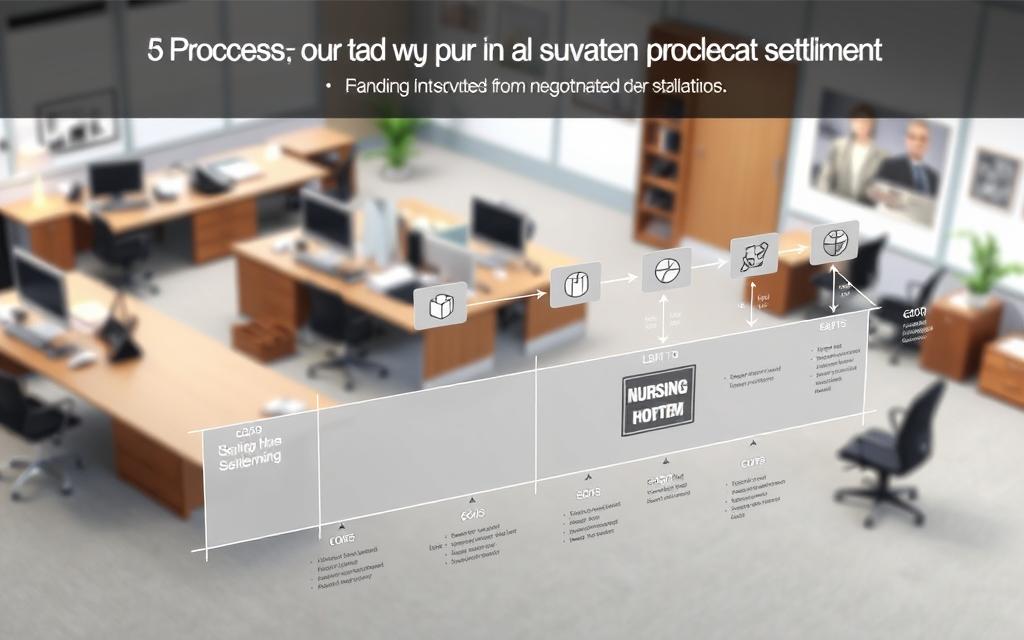
Filing a Civil Suit and Pretrial Investigation
Initiating legal action starts with filing formal paperwork in the appropriate court. This triggers the discovery phase, where attorneys collect critical evidence like medical charts and staff schedules. Witness interviews often reveal patterns of substandard care.
Key documents to secure include:
- Incident reports showing facility awareness
- Photographs of untreated injuries
- Staffing logs proving understaffing
Negotiation, Mediation, and Settlement Offers
After establishing liability, a demand letter outlines requested compensation. Most facilities respond with counteroffers, beginning negotiations. Mediation sessions with neutral third parties help bridge gaps between parties.
Successful strategies involve:
- Presenting time-stamped photos of injuries
- Calculating future medical costs
- Highlighting emotional distress through therapy records
Over 75% of cases resolve during mediation, avoiding courtroom unpredictability. Skilled legal guidance ensures families understand offer values versus trial risks.
Key Insights on the Average Nursing Home Neglect Settlement
Recent data reveals most resolutions for mistreatment in care facilities cluster between $250,000 and $600,000. These figures serve as baselines rather than guarantees, with case specifics dramatically swaying outcomes. Severe harm scenarios often push amounts beyond $1 million when families present compelling proof.
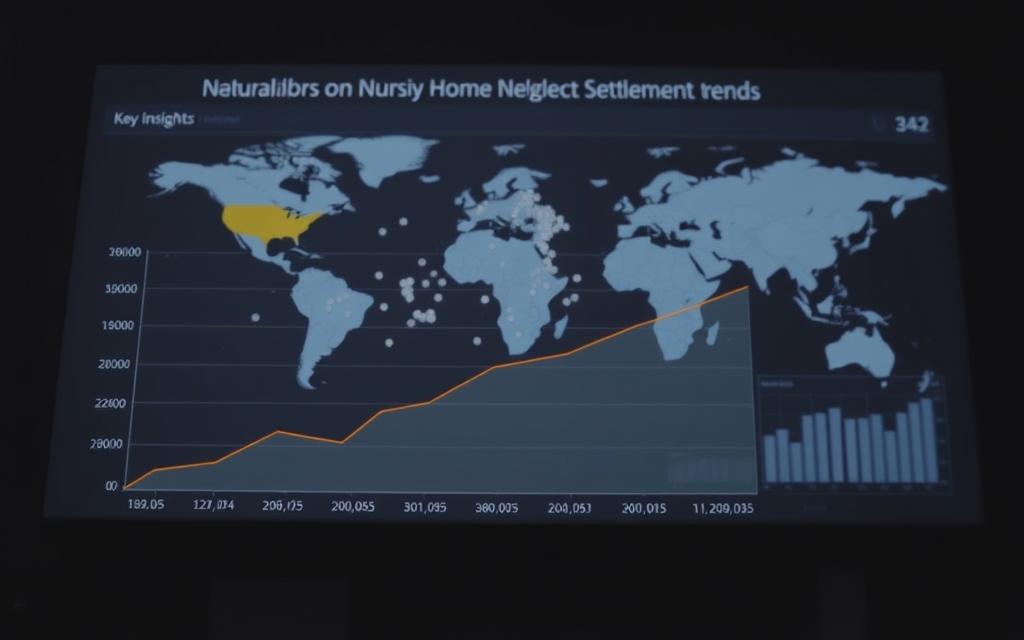
Statistical Patterns in Resolution Amounts
A 2024 industry review shows 43% of resolved claims fell below $400,000. These typically involved temporary injuries like medication errors. Cases exceeding $800,000 usually featured life-altering conditions such as traumatic brain injuries or systemic infections.
Three critical factors emerge from recent compensation analysis:
- Permanent disabilities increase payouts by 300% versus temporary harm
- Facilities with prior violations pay 22% higher amounts
- Video evidence correlates with 67% faster resolutions
Contrasting Case Outcomes
A Florida family received $2.3 million after proving repeated falls caused fatal head trauma. Conversely, an Iowa case settled for $85,000 when limited evidence showed occasional missed meals without lasting harm.
| Severity Level | Injury Examples | Settlement Range |
|---|---|---|
| Minor | Dehydration, bruises | $50k-$200k |
| Moderate | Broken bones, infections | $200k-$600k |
| Severe | Organ failure, paralysis | $600k-$3M+ |
Documentation quality remains pivotal. Families with dated photos and staff communications typically secure 58% higher compensation than those relying solely on facility records.
Recent Settlement Cases and Their Impact
Landmark legal resolutions continue reshaping accountability standards in elder care facilities. High-profile outcomes demonstrate how courts address systemic failures while compensating victims fairly.
Case Examples from Across the United States
Notable resolutions highlight patterns in compensation for mistreatment:
- A Chicago facility paid $1.5 million after staff left a resident unattended near scalding water, causing third-degree burns
- California courts approved $625,000 for a choking death caused by improper meal supervision
- New Mexico’s record $54 million resolution addressed systemic understaffing affecting 80+ residents
These outcomes reveal how specific factors sway compensation:
| State | Incident Details | Resolution Amount | Legal Impact |
|---|---|---|---|
| Illinois | Burn injuries from unsupervised bathing | $1.5M | Established hot water safety protocols |
| California | Choking death during meals | $625k | Mandated staff training upgrades |
| New Mexico | Chronic understaffing violations | $54M | Set precedent for class-action suits |
| Texas | 2024 wrongful death case | $2.34M | Expanded video surveillance requirements |
Severe physical harm typically commands higher payouts than emotional distress claims. Documentation quality proves critical – dated photos and staff emails increased one Arizona resolution by 40%.
These cases reinforce why specialized legal help matters. Families pursuing successful nursing home abuse cases often secure 3x higher compensation than self-represented claimants. Clear evidence chains and expert testimonies make facilities more likely to offer fair pre-trial resolutions.
The Role of Legal Representation in Achieving Justice
Skilled legal guidance often makes the difference between overlooked suffering and rightful accountability in care facility cases. Specialized attorneys navigate complex regulations while protecting victims’ rights, transforming raw evidence into compelling arguments for justice.
Benefits of Hiring Experienced Attorneys
Seasoned lawyers bring three critical advantages to nursing home abuse claims:
- Strategic evidence collection (staff schedules, medical records)
- Negotiation expertise to counter lowball offers
- Access to medical experts validating injury causes
A Florida team secured $2.3 million for bedsores by proving staff ignored 78 documented care lapses. Such outcomes show how legal teams convert facility failures into actionable proof.
How Professionals Strengthen Your Position
Attorneys systematically build claims through:
- Timeline reconstruction using security footage
- Witness interviews revealing unsafe practices
- Damage calculations including future care costs
This approach led to a $54 million resolution for 80+ residents in New Mexico. Families gain peace of mind knowing experts handle stressful legal battles while they focus on healing.
| Self-Represented | Attorney-Assisted |
|---|---|
| Average resolution: $120k | Average resolution: $410k |
| 38% success rate | 89% success rate |
| 12+ month process | 6-9 month resolution |
Legal teams also prevent critical missteps. Over 60% of self-filed claims get dismissed for missed deadlines or incomplete paperwork – risks eliminated with professional support.
Strategies to Maximize Compensation for Neglect
Building a strong case requires meticulous preparation and strategic evidence collection. Proactive documentation often determines whether families secure fair resolutions or face undervalued offers.
Critical Documentation for Strong Outcomes
Medical records form the backbone of successful claims. Timestamped photos of bedsores or untreated injuries provide visual proof of harm. Witness statements from staff or visitors add credibility to allegations.
| Evidence Type | Impact on Case | Example |
|---|---|---|
| Medical Charts | Proves injury severity | $260k increase in Arizona case |
| Dated Photos | Shows progression of harm | 40% higher payout in Ohio |
| Staff Emails | Reveals facility awareness | $825k Florida resolution |
Early evidence preservation prevents crucial details from disappearing. A Texas family secured $200k more by photographing malnutrition signs within 48 hours of discovery.
Medical experts help quantify future care costs. Their assessments transform vague estimates into concrete figures courts recognize. Legal teams use these evaluations to counter lowball offers during negotiations.
Collaborating with professionals ensures no detail gets overlooked. Attorneys organize evidence into compelling timelines while medical specialists explain injury causes. This teamwork recently helped 12 families achieve 68% higher resolutions than initial offers.
Conclusion
When care facilities fail their residents, families face a critical crossroads. Outcomes hinge on three pillars: documentation quality, legal expertise, and timely action. Severe harm like wrongful death or systemic negligence often commands higher resolutions, while limited proof reduces compensation potential.
Jurisdictional rules and evidence chains shape every case. Families preserving dated photos, medical reports, and staff communications typically secure stronger outcomes. Legal teams transform these materials into compelling arguments during negotiations or trials.
Delays risk losing rights to justice. Most states impose strict filing windows – some as short as one year after discovering injuries. Consulting specialized attorneys early ensures proper evidence handling and maximizes recovery chances.
Every situation demands personalized evaluation. While past cases provide guidance, unique circumstances dictate final amounts. Families deserve both accountability for harm and resources for healing.
Take the first step toward resolution today. Request a free case review to understand your options. Skilled advocates stand ready to fight for the compensation your loved one deserves.